Machine learning · Language data
Sinhala NLP Datasets — Text, Speech, OCR and Labelled Corpora
Sinhala has 17 million speakers and almost no commercial training data. Collected here, in the country, by native speakers — licensed for commercial use, documented for reproducibility, and built to your specification rather than whatever happened to be scraped.
Data Tune builds a Sinhala NLP dataset to your specification: text corpora, transcribed speech for ASR, studio voice data for TTS, OCR and handwriting images, and labelled sets for sentiment, named entities, intent and offensive-language detection. Collected in Sri Lanka by native speakers, licensed for commercial use. Speech from USD 14 per audio hour, annotation from USD 38 per 1,000 items.
Four data types
What can be built
Specify the task and the dataset is designed backwards from it. Most projects combine two of these.
Text corpora and annotation
Sinhala text collected to a domain you choose — news, legal, medical, agricultural, government, conversational — then annotated for the task: sentiment, named entities, intent, topic, toxicity, part-of-speech. Transliterated Singlish handled as a first-class case, not discarded, because that is how a great many Sri Lankans actually type.
Speech for ASR
Recorded and transcribed Sinhala audio with the variation a real model needs: speakers across age, gender and district, read and spontaneous speech, clean rooms and noisy streets, phone-channel and wideband. Time-aligned transcripts, speaker metadata, and a documented train, validation and test split.
Voice data for TTS
Single-speaker studio recordings for speech synthesis: phonetically balanced scripts, a consistent recording environment, and the written consent and voice-licence paperwork that makes the resulting voice usable in a commercial product. The paperwork is the part that usually stops a TTS project, so it is done properly first.
OCR, handwriting and documents
Printed and handwritten Sinhala images with ground-truth transcriptions — forms, ledgers, receipts, letters, archival records, mixed Sinhala-English-Tamil documents. Sinhala script is hard for OCR because of its combining vowel signs, so annotation follows a written grapheme convention rather than being left to each annotator’s judgement.
Where the gap is
Why a Sinhala NLP dataset has to be collected, not scraped
Sinhala is a genuinely low-resource language, and the honest picture of what already exists is short.
| What exists today | What it is | Why it may not solve your problem |
|---|---|---|
| Academic corpora | NSINA (500,000+ news articles), SOLD (10,000 annotated posts), ACTSEA (Sinhala and Tamil emotion) | Research releases from university groups. Each carries its own licence, which must be checked before commercial use, and the domain is whatever the researchers studied — not yours |
| Multilingual web crawls | Sinhala slices of large open datasets | Sinhala is a fraction of a percent of these corpora, and the text is noisy, duplicated and mostly news or scraped boilerplate |
| Offshore data vendors | International training-data companies list Sinhala among many languages | Collection is subcontracted into the country anyway, with the margin taken in between and no one on the ground to check quality |
| Commissioned, in-country collection | What this page offers | Your domain, your task, your licence, collected by native speakers and documented so a reviewer can reproduce it |
In 2026 Dialog Axiata and Rime Labs launched Arcana, an enterprise Sinhala text-to-speech model. Rime curated its training data internally, because there was no commercial Sinhala corpus to buy. Enterprise demand for Sinhala AI is real and arriving — the data supply underneath it is still being built by hand, project by project.
What makes it trainable
Six things shipped with every corpus
A folder of audio files is not a dataset. These six are what let your model’s results be explained to whoever asks.
| Shipped with it | Why your ML team needs it |
|---|---|
| Datasheet documenting the corpus | Collection method, speaker or author demographics, known gaps and intended use |
| Train, validation and test splits | Split by speaker or author, never randomly — random splits leak and inflate your scores |
| Inter-annotator agreement scores | A labelling task with no agreement figure has unknown quality |
| Written annotation guidelines | The actual rules annotators followed, so you can extend the set later consistently |
| Class balance report | What the label distribution really is, before it surprises your model |
| Consent and licence records | Written permissions, so the dataset is usable in a commercial product |
Want to see the data quality first?
Free sample corpus extract, and a free consultation with Militha Mihiranga on how to specify the set your task actually needs. No charge, no obligation.
Pricing
What language data costs
Published starting prices in US dollars. Language data is priced by the unit that costs money to produce: an audio hour, a thousand labelled items, a thousand document images.
Pilot corpus
From- 10 audio hours or 10,000 labelled items
- Full datasheet and splits
- Annotation guidelines written
- Agreement scored on a double-labelled subset
- 2 to 3 weeks
Production corpus
From- Speaker-balanced across district, age, gender
- Time-aligned transcription included
- Delivered in scheduled batches you approve
- Commercial licence, assigned to you
- Rolling delivery over 2 to 4 months
Ongoing supply
From- A committed monthly volume of data
- Specification refined as your model learns
- Hard cases fed back and targeted
- Priority over one-off work
- Three-month minimum
Need a language, task or format not listed here?
Custom solutions are always available. Tamil, Sinhala-English parallel corpora, code-switched speech, a domain nobody has collected, an unusual annotation schema, an exclusivity arrangement, or white-label collection where the dataset carries your name and not ours. All quoted as one scoped project or a retainer, and the consultation that works out what you need is free.
15% off the first three months of any retainer, or 10% off a first project. Applied at quotation — mention it when you make contact.
Unit rates
| Work | Rate (USD) | Note |
|---|---|---|
| Speech collection and transcription | $14 – $26 per audio hour | Lower rate at 100+ hours; spontaneous speech costs more than read |
| Transcription of audio you already hold | From $9 per audio hour | Time-aligned, with a speaker-change marker |
| TTS studio voice recording | From $34 per audio hour | Includes voice licence and consent paperwork |
| Text annotation, single label | From $38 per 1,000 items | Sentiment, topic, intent, toxicity |
| Text annotation, span level | From $95 per 1,000 items | Named entities, token-level tagging |
| OCR ground truth | From $0.11 per page image | Printed; handwritten from $0.24 |
| Sinhala-English parallel sentences | From $0.09 per sentence pair | Translated and reviewed |
| Double labelling for agreement scoring | Add 55% | Applied to a subset by default, or the whole set on request |
| Exclusive licence | Add 40% or quoted | Nobody else is ever supplied the same data |
| Anything not listed | Quoted | Custom scoping is free |
Prices in US dollars; Sri Lankan clients invoiced in LKR at the rate on the invoice date. PayPal, direct bank transfer or digital currency, on staged, milestone or on-delivery terms. Published rates are for non-exclusive commercial licences assigned to you; exclusivity is available as above.
Packages
Project or retainer
Model training is rarely a one-off need. Both routes are available, and which fits depends on whether your specification is settled.
Project
A defined corpus, a fixed price, a delivery schedule. Right when you know exactly what you need.
- Quoted individually after the pilot
- Staged, milestone or on-delivery payment
- Commercial licence assigned on final payment
- One free revision round within 14 days
- No ongoing commitment
Retainer
A committed monthly volume, with the specification refined as your model reveals what it is weak at.
- Billed monthly, three-month minimum
- Auto-renews unless cancelled with 30 days notice
- Unused volume does not carry over to the next month
- Error analysis feeds the next batch’s targeting
- Priority over one-off work in the queue
Examples
Illustrative engagement examples
Representative scenarios showing how language-data projects are typically scoped and priced. These are illustrations, not real client data, and no client is identified.
Voice assistant for a local bank
Spontaneous Sinhala speech over a phone channel, balanced across districts and age groups, covering banking vocabulary, with time-aligned transcripts and a speaker-disjoint test split.
Moderation model for a social platform
Sinhala and transliterated Singlish posts labelled for toxicity at both post and token level, double-labelled throughout for agreement scoring, with written guidelines handed over.
Digitising a government archive
Handwritten Sinhala ledger pages with ground-truth transcription to a documented grapheme convention, mixed Sinhala-English records handled in a single schema.
How it runs
Six steps, and who does each one
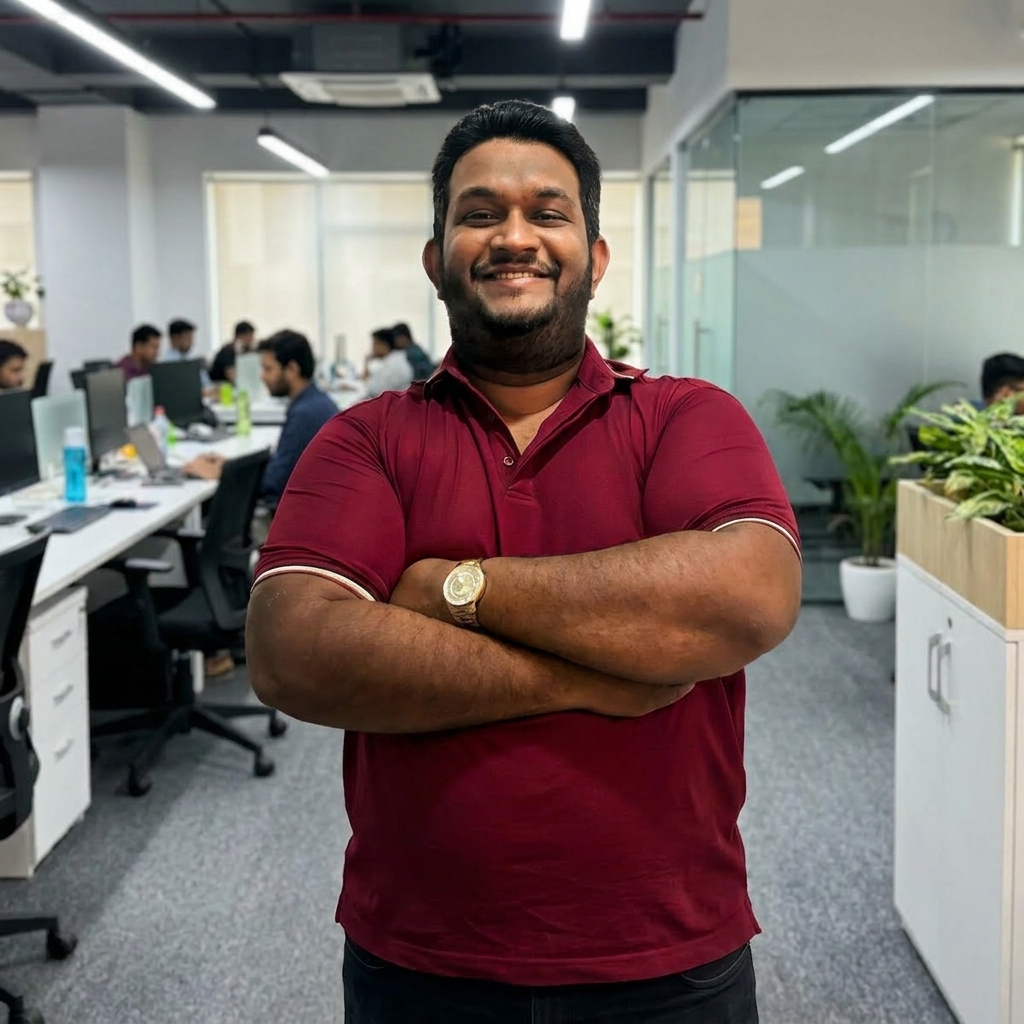
Militha Mihiranga writes the specification, trains the annotators and signs off every batch before it ships.
You describe the model, not the dataset
What the model has to do, where it will run, and what it currently gets wrong. The dataset is designed backwards from the task — specifying hours or row counts first is how teams end up with data that does not move their metric.
You and Militha · free consultationSpecification and annotation guidelines
Label set, edge cases, what counts as ambiguous, and how Singlish and code-switching are treated. Written down before anyone starts labelling, because an undocumented rule is an inconsistent one.
Militha Mihiranga · 3 to 5 daysFree sample extract, then a paid pilot
A sample from an existing corpus shows you the quality standard at no cost. The paid pilot then produces real data to your own specification, which is where unworkable guidelines surface — before the full budget is committed.
Data Tune · sample free, pilot 2 to 3 weeksAnnotator training and agreement check
Native speakers trained on your guidelines and tested on a gold set before they touch production data. Agreement is measured, and where it is low the guideline is fixed rather than the disagreement averaged away.
Militha and the annotation team · 1 weekProduction in batches you approve
Data arrives in batches rather than one delivery at the end. You train on batch one while batch two is being built, and anything wrong is caught at 10 percent of the volume instead of 100.
Data Tune · rollingFinal delivery with the full paperwork
Corpus, datasheet, splits, guidelines, agreement scores, class balance report, and the consent and licence records. Delivered in your format, with the commercial licence assigned to you.
Data Tune · on the agreed dateThe part that stops projects
Consent, licensing and who owns the voice
Language data is people’s speech and writing, which makes the paperwork load-bearing rather than administrative. Every contributor gives written, informed consent covering AI training specifically — not a generic release — and is told how their recording or text will be used. Contributors are paid fairly for their time.
For TTS work, the voice licence is explicit about whether a synthetic voice may be built from a speaker’s recordings and in what contexts it may be used. A dataset with vague voice rights is a product risk you inherit, so it is settled in writing before recording begins.
What is not done: no scraping of personal social media content as training data, no recording without consent, and no supply of an academic corpus under a licence that forbids the use you intend. Where a public corpus genuinely fits your need, you will be told so rather than sold a collection project — that is a shorter conversation and a straighter one.
Practice aligns with Sri Lanka’s Personal Data Protection Act No. 9 of 2022, the EU GDPR and applicable US state frameworks. This describes alignment with recognised frameworks, not a certification or legal opinion; confirm requirements for your own deployment with your counsel.
Questions
What ML teams ask before commissioning a corpus
How much does a Sinhala dataset cost?
At Data Tune, speech collection with transcription runs USD 14 to 26 per audio hour, with the lower rate at 100 hours or more. Text annotation starts at USD 38 per 1,000 items for single labels and USD 95 for span-level work. OCR ground truth starts at USD 0.11 per printed page. A pilot corpus of 10 audio hours or 10,000 labelled items starts at USD 900.
Can I not just use the free Sinhala datasets that already exist?
Sometimes, and you will be told when that is the case. Academic corpora such as NSINA, SOLD and ACTSEA are substantial, but each carries its own licence that must be checked for commercial use, and the domain is whatever those researchers studied. If your task is banking speech, medical text or handwritten forms, no public Sinhala corpus covers it and collection is the only route.
How do you handle Singlish and code-switching?
As first-class data rather than noise to be filtered out. A great many Sri Lankans type Sinhala in Latin script, and a model trained only on Sinhala script will fail on real user input. The annotation guidelines state explicitly how transliterated text and mixed Sinhala-English sentences are labelled, and the proportion of each in the corpus is reported in the datasheet.
Who owns the dataset and the voices in it?
You own the dataset, under a commercial licence assigned on final payment, and may train and deploy models from it. Contributors give written consent covering AI training specifically, and TTS voice licences state explicitly whether a synthetic voice may be built and where it may be used. Exclusive licences, where the data is never supplied to anyone else, are available at a premium.
Why does the test split have to be speaker-disjoint?
Because a random split puts the same speaker in both training and test data, and the model then recognises the voice rather than the language. Your accuracy figure looks excellent and collapses in production. Splits here are disjoint by speaker for audio and by author or document for text, and the split method is stated in the datasheet.
Can you collect Tamil, or other languages?
Yes. Tamil is collected in house alongside Sinhala, as are Sinhala-English and Tamil-English parallel corpora and code-switched speech. For languages outside Sri Lanka, collection is not offered — a vendor based in that country will do it better, and you will be told so rather than sold something weaker.
Ready to start?
Request the free sample corpus
Tell me what your model has to do. You get a sample extract at no cost, a free consultation on how to specify the set, and a firm quote after the pilot. First reply within 24 hours, from Kadawatha, Sri Lanka.
Kadawatha, Western Province,
Sri Lanka HoursMon–Fri, 8:30am – 5:30pm (UTC+5:30) LanguagesSinhala · Tamil · English